

History Tour – Step 10
Listen to the recording :
Click on the image to make it bigger :
Text of the recording below :
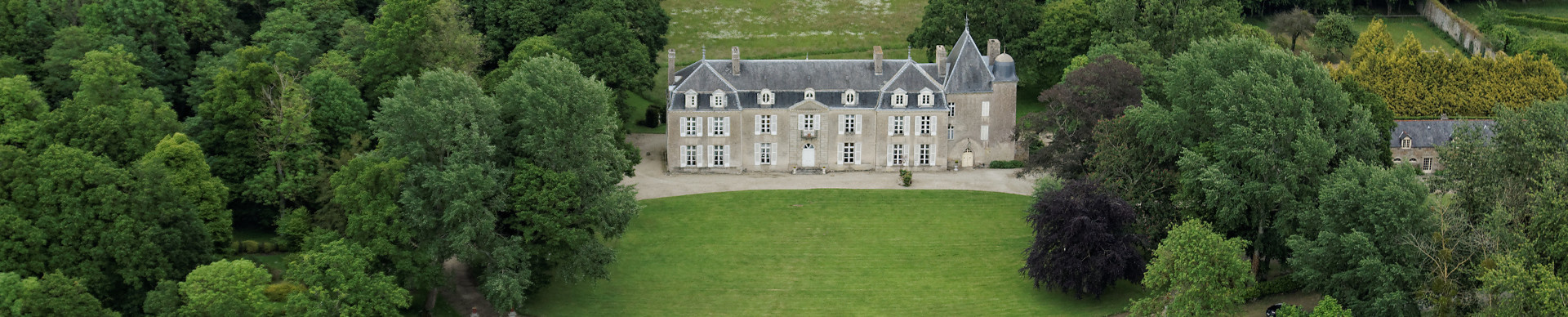
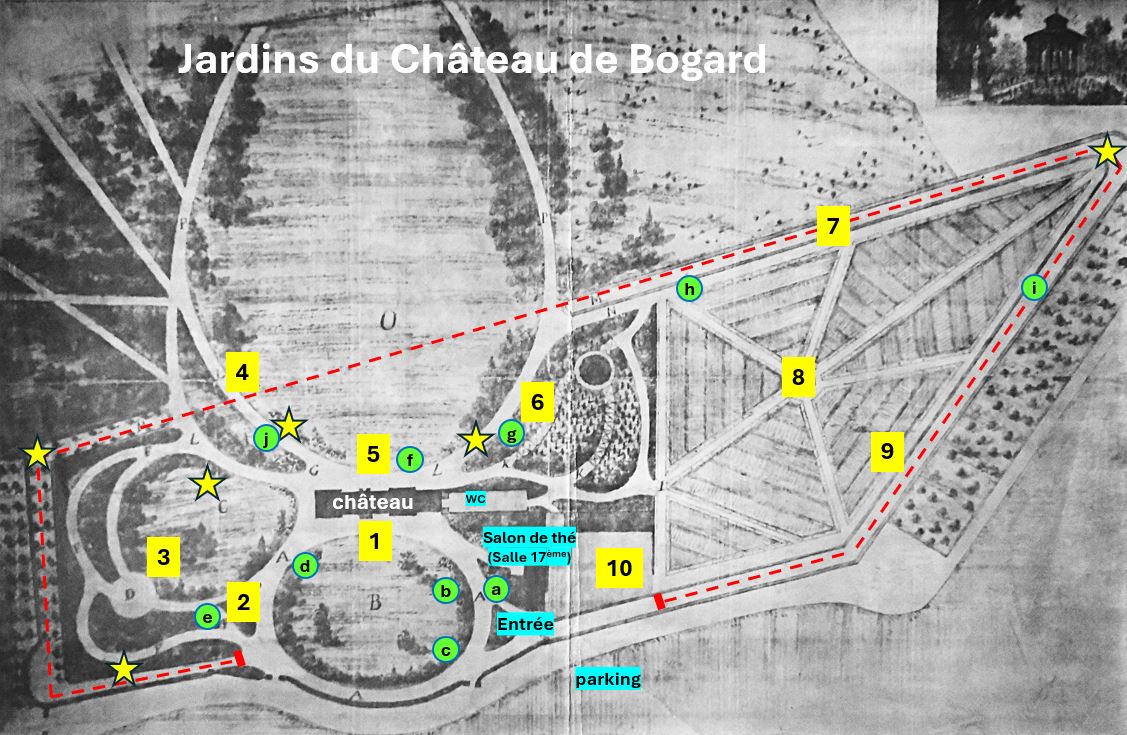
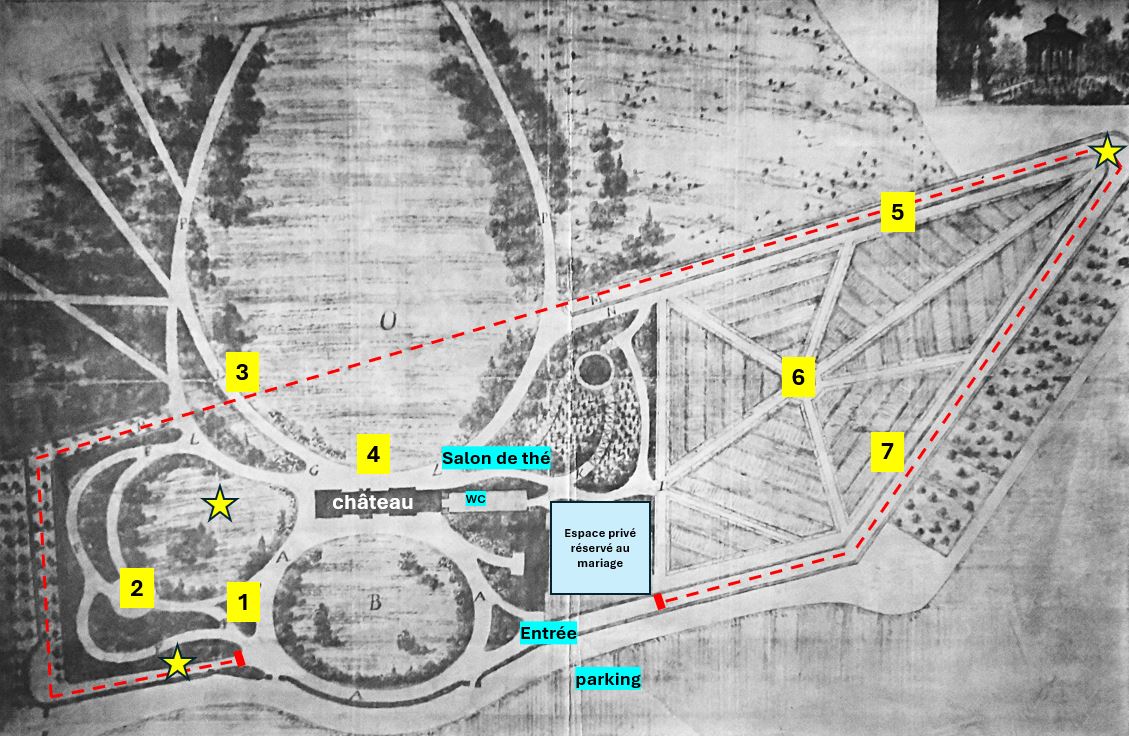
The last stage of your walk. You are now in the Orangery of the château, a space made up of the former farm buildings and stables. The oldest buildings of the Orangery date back to the 17th century. A few years ago they were converted into reception rooms, allowing weddings to be held here; every year many couples come to celebrate their union here with their guests.
The Orangery offers an intimate space, sheltered from view, complementing the large open spaces of the château’s gardens.
At the centre, in the middle of the lawn, there once stood a dovecote.
Under the Old Regime, before the French Revolution, the dovecote was a symbol of nobel power, a privilege reserved for the rural nobility. Owning a dovecote was a feudal right, known as the “droit de colombier” (the right to keep a dovecote).
The size of a dovecote indicated the social rank of its owner. The number of nesting holes, known as “boulins,” corresponded to the amount of land owned by the lord. Building and maintaining a dovecote was, moreover, quite expensive: only very wealthy landowners could afford one. Owning a dovecote was therefore also a demonstration of landed and financial wealth.
Beyond these aspects of prestige, the dovecote had practical functions too. Pigeon droppings were used as a natural fertilizer for the land. In many countries, guano (a word derived from the Spanish for bird droppings) is also a highly sought-after fertilizer. Young pigeons, known as squabs, were eaten and considered a delicacy, and pigeons were sometimes used to carry messages.
The dovecote was thus a symbol of power. But peasants often hated these structures, as the birds would eat the seeds sown in the fields, with no compensation for their losses. This privilege was therefore abolished during the French Revolution in 1789, as a symbol of the injustices of the feudal order.
At the far end of the courtyard, you can also see a statue. This is Diana, goddess of fertility and the hunt, protector of wild animals in Roman mythology. She is the daughter of Jupiter and the twin sister of Apollo.
According to legend, Diana wished to remain a virgin for her entire life, after witnessing her brother’s birth. Armed with a bow and arrows, and lightly dressed, she lived in the forest and its clearings, on the border between the wild and the civilized world. She was accompanied by a retinue of nymphs.
During a hunt in the forest, Actaeon, a famous hunter from Greek mythology, came upon the goddess as she was bathing naked with her companions. Furious at having been seen in this way, she turned the hunter into a stag. Actaeon’s own hunting dogs, driven mad with rage by the goddess and mistaking their former master for a wild beast, threw themselves upon him and killed him.
This somewhat cruel story illustrates the complexity, and at times the ferocity, of relationships between men and women since the dawn of time. It is an ancient story, but one that still resonates today…
And so we come to the end of the visit to the Gardens of Château de Bogard and of the initiatory trail “From the Rough Stone to the Cut Stone.”
We are very happy to have accompanied you throughout this walk, and perhaps even to have inspired you.
Thank you for your visit.
And see you again soon…