

History Tour – Step 1
Listen to the recording :
Click on the image to make it bigger :
Text of the recording below :
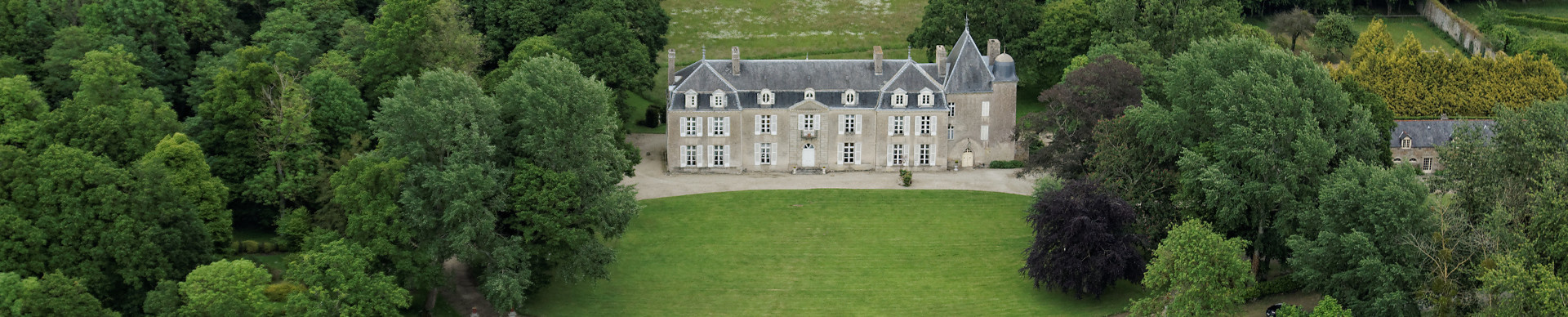
You are here at Château de Bogard, in a space that is perhaps unique in France. A space whose architecture, both interior and exterior, draws fully on the philosophical ideas of the Age of Enlightenment and on the symbols of 18th-century Freemasonry.
The château you see today was built just before the French Revolution by a couple of young aristocrats from the Breton nobility: Guillaume-François de La Noüe and Félicité Meslé de Grandclos. Together they have built their home, drawing on the philosophical symbols of the Enlightenment: humanism and openness to nature, and on those of Freemasonry: the quest for self-knowledge and freedom of conscience. All the interior features of the château and the exterior features of the gardens make use of these symbols. Moreover, everything presented to you today is identical to what was designed and put in place by this couple, owners of the estate a little over 200 years ago.
The owners of the time were unfortunately unable to enjoy their home as much as they would have liked. For no sooner was the château built, no sooner had the paint dried, than the French Revolution broke out. And because of the Reign of Terror instituted by Robespierre, the couple were forced to emigrate, going first to Jersey, then to London, where Félicité’s father, a shipowner from Saint-Malo, had some good connections.
François Guillaume de la Noüe died in exile. So did his son. Only Félicité and their daughter Pauline returned; Pauline inherited the estate on her mother’s death. Félicité spent the last years of her life perfecting the architectural project that she and her husband had envisioned, notably by completing the vista you can see in front of the château, on the side of the pond.
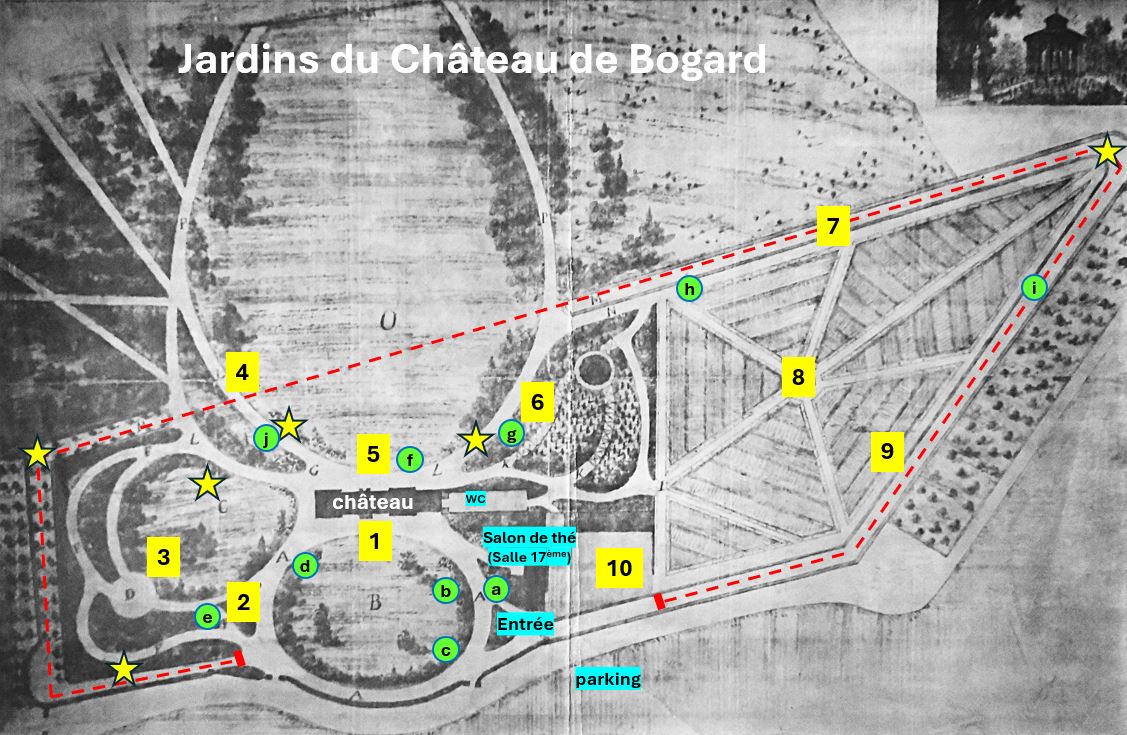
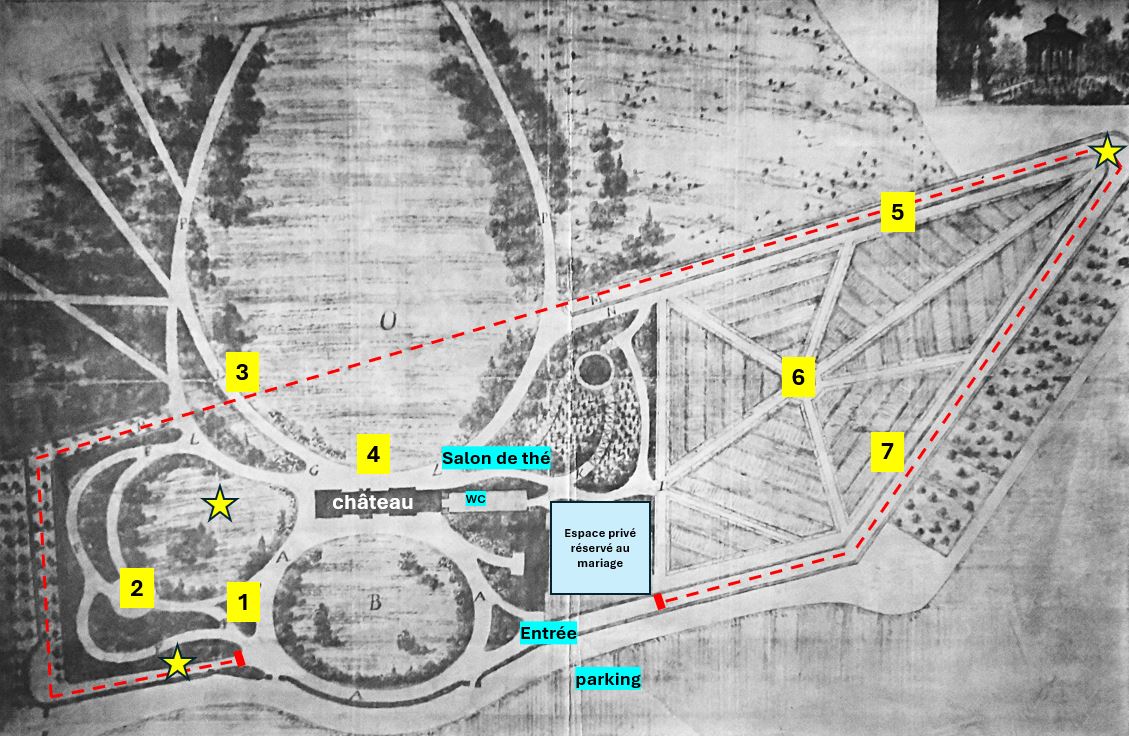
Already, we are revealing to you the first secrets of the Gardens of Château de Bogard. For the overall layout of the Gardens follows a particular orientation. First, an East-West axis, following the course of the sun. This orientation symbolizes human existence, which is birth, life and death. To the East, an egg-shaped, rounded space symbolizes birth, the origin of the world, the place where the sun is reborn each day. At noon, the sun shines above the château, symbolizing the strength and full maturity of existence. To the West, the long vista in front of the château represents life continuing to its end, symbolized by the setting sun. To the North and South, two other gardens form a complementary initiatory symbolism. To the North, the Garden of Uncertainties, the starting point of the initiatory trail. And to the South, the Garden of Knowledge, its culmination.
The map you downloaded is a reproduction of an engraving depicting the Gardens of Bogard as they appeared in the 18th century, showing the egg, the Garden of Uncertainties and the Garden of Knowledge.
These landscape features are invisible to the uninitiated. It was purely by chance that they were discovered by the current owners of the estate, Messrs. Harald and Baudoin CAPELLE, who one day unearthed abandoned archives in the attic, lost under a pile of dusty boards. These archives were to reveal the whole history and all the secrets of Château de Bogard. The CAPELLE family, owners of the estate since 1962, has been restoring this history and this memory ever since.
It is this history and this memory that we are going to present to you through the visit of the Gardens of Bogard…
We now invite you to continue discovering the Gardens by heading to stage number 2. Make your way to the Garden of Uncertainties…